
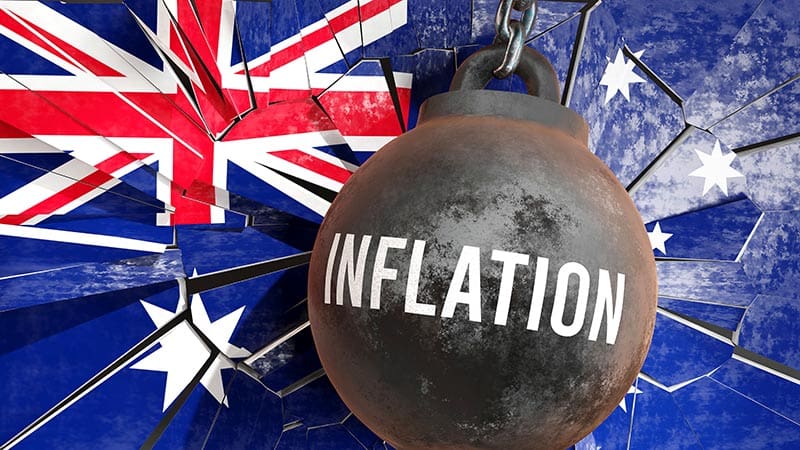
Australia’s inflation took an unexpected turn in May, rising more sharply than anticipated and effectively shutting the door on any chance of an interest rate cut this year.
The latest figures from the Australian Bureau of Statistics (ABS) show that the monthly Consumer Price Index (CPI) has climbed to 4.0%, up from 3.6% in April. This increase is likely to cause concern within the Reserve Bank of Australia’s (RBA) headquarters in Sydney.
Michelle Marquardt, ABS Head of Prices Statistics, noted that while the headline figure appears worrying, volatile items may be skewing the overall picture.
“CPI inflation is often impacted by items with volatile price changes like automotive fuel, fruit and vegetables, and holiday travel,” she said.
“It can be helpful to exclude these items from the headline CPI to provide a view of underlying inflation, which was 4.0 per cent in May, down from 4.1 per cent in April.”
Even with this context, the May CPI result places inflation well outside the path needed to return to the RBA’s 2–3% target range by the end of 2025. Inflation has now climbed from 3.4%, where it sat consistently from December 2023 through February 2024, and if this trend carries through to the June quarter data, the RBA may be forced to consider a rate hike rather than a cut.
Rate Rise Now a Serious Possibility
Canstar’s Group Executive for Financial Services, Steve Mickenbecker, said the latest CPI result places a potential rate increase firmly back on the table.
“This is the third consecutive lift in the CPI Indicator, rising from 3.4% in February to 4.0% in May. It’s clear inflation has drifted off the path toward the RBA’s 2–3% target band,” he said.
He added that should the June quarter figures show a similar pattern, the Reserve Bank may have little choice but to act sooner rather than later.
“The CPI jumped 1.0% in the March quarter, up from 0.6% in December. Another rise—or even a failure to ease—in the June quarter will severely test the RBA’s patience. Waiting another three months for the next CPI release may be too risky given the threat of entrenched inflation expectations.”

Renters, Borrowers Left To Tackle Inflation
The latest inflation figures paint a bleak picture for borrowers.
A 0.25% rate rise would push repayments on a $600,000 home loan up by roughly $100 per month over a 30-year term.
Unfortunately, the groups already feeling the most pressure from inflation, renters and mortgage holders, would be hit hardest if the next RBA move is upward.
Housing was one of the biggest contributors to May’s inflation jump, rising 5.2%, up from April’s 4.9%. Rents climbed 7.4% over the year, reflecting the extremely tight rental market.
Any further increase in interest rates would add pressure to mortgage holders, which in turn is likely to flow through to renters as landlords pass on additional costs.
With around a third of households renting (31.4%) and another third paying off a mortgage (36.8%), a large portion of the population will feel the impact of rising inflation and any subsequent rate hikes.

The upcoming stage three tax cuts, due to take effect on 1 July, are also being viewed differently in the current environment.
Instead of easing the cost-of-living burden, there are now fears the tax savings may simply be swallowed up by higher mortgage or rental payments—and potentially add further fuel to inflation.
The RBA’s next meeting is scheduled for 6 August, leaving the Board time to assess the June inflation data. In its 18 June meeting, the RBA kept the interest rates on hold at 4.35%.
Real Estate Institute of Australia President, Leanne Pilkington, urged caution, arguing that the broader economic context should encourage the RBA to hold off on any rate increases.
She noted sluggish economic growth, a slight increase in the unemployment trend, and four consecutive quarters of negative per-capita GDP growth—all signs that the economy may not be in a position to absorb another rate hike.
Building Industry Still Struggling
The yearly increase in new dwelling prices held firm at 4.9%, as builders continued to pass on elevated labour and material expenses.
The ABS also released engineering construction data for the March quarter (26 June), revealing the first decline in two years.
Engineering construction volumes fell 2.3% in the March 2024 quarter, impacting both public and private sector projects.
Public sector engineering activity dropped 2.4%, while private sector work decreased 2.2%.
This reversal is concerning, particularly given that engineering construction had previously been one of the few growth drivers for the industry.
With all three major segments of construction now moving backwards, pressure on the sector continues to mount.
Master Builders Australia CEO, Denita Wawn, said inflation is weighing heavily on construction and undermining efforts to resolve the housing crisis.
“Inflation is a capacity killer, making investment more expensive and less attractive.
“On the ground, we continue to hear projects for new homes, commercial, or infrastructure construction simply don’t stack up because it takes too long to build and is too costly.
“If we don’t get inflation under control and urgently start boosting housing supply, we are in for a lengthy period of pain and depressed construction activity.
“We know governments have acknowledged that more reform is needed to reduce building costs, but the rubber needs to hit the road.
“Bringing down housing and rental inflation can only be achieved once we get a move on and speed up planning reforms, address tradie shortages through domestic and skills migration pathways, reform the regulatory environment, and scrap damaging elements of recent IR changes.” Ms Wawn said.
Article Q&A
What is the current inflation rate in Australia?
According to the ABS, the CPI Indicator for May 2024 shows an annual rise of 4.0%, up from 3.4% at the end of 2023.