

BREAKING NEWS: RBA Cuts Interest Rates Below 4% for the First Time in Two Years
The Reserve Bank of Australia (RBA) has reduced the official cash rate by 0.25 percentage points, dropping it below 4% for the first time since May 2023, despite stronger-than-expected job growth and moderate wage increases.
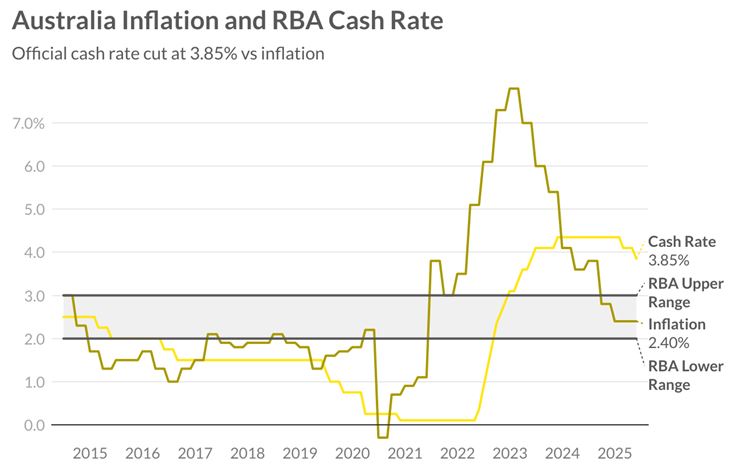
The new rate of 3.85% reflects a significant shift compared to two years ago. Back in 2023, headline inflation was sitting at 7%, with underlying inflation above 6%. Today, headline inflation has eased to 2.4%, while the RBA’s preferred measure of core inflation has fallen to 2.9%.
With inflation now within the central bank’s target range of 2–3%, financial markets had widely anticipated a rate cut at the RBA’s meeting on Tuesday, 20 May. Markets have also priced in expectations for two additional cuts before the year ends.
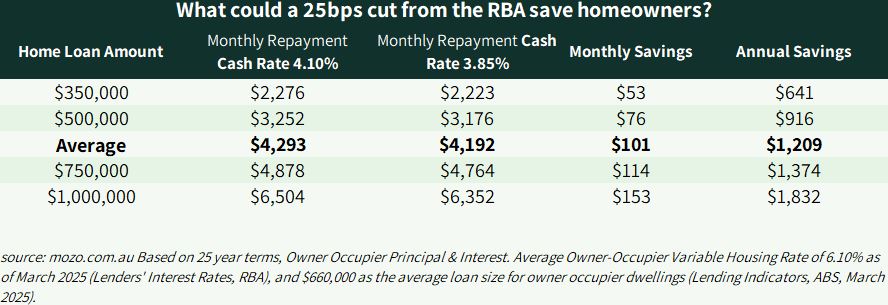
A 0.25% reduction, if fully passed on by lenders, would see the average mortgage-holder with a $600,000 loan save around $90 per month on repayments.
Inflation Remains the Key Focus
Among all the economic indicators the RBA tracks, inflation continues to dominate its decisions. With trimmed mean inflation dipping below 3% for the first time since 2021, the Board decided it was appropriate to move rates lower.
In its Monetary Policy Decision, the RBA noted that the risks of inflation rising again had eased:
“With inflation expected to remain around target, the Board therefore judged that an easing in monetary policy at this meeting was appropriate.”
The central bank also addressed speculation about whether a larger cut was needed, stressing that global uncertainties remain a factor to watch.
“The Board remains cautious about the outlook, particularly given the heightened level of uncertainty about both aggregate demand and supply.”
“It considered a severe downside scenario and noted that monetary policy is well placed to respond decisively to international developments if they were to have material implications for activity and inflation in Australia.”
Global Factors Driving the Decision
Oliver Hume’s Chief Economist, Matt Bell, said that global trade tensions, triggered by tariffs announced by Donald Trump in April, played a crucial role in the RBA’s move.
“Even if the originally announced policies are only partially implemented, as now seems likely, they are probably disinflationary for the world outside the US,” he explained.
“For the RBA, this obviously trumped – pun intended – the risk that a still-tight labour market would keep pressure on domestic inflation.”
Bell also highlighted how quickly market expectations have shifted:
“As late as 28 April, the market still had another three or four more 25bps cuts fully priced in for 2025 (for a total of 6).”
“Since then, we’ve had a slightly disappointing March CPI, a stronger than expected April Labour Force and slightly stronger than expected March quarter wages growth, as well as some deals and backtracking of the initial tariff announcements.”
What’s Next?
The rate cut marks a turning point for Australia’s economy, with more adjustments likely before the end of the year. While inflation is finally under control, ongoing global uncertainties could still shape future monetary policy.
More updates to follow.